Best Pet Reptiles for Beginners: Top 5 Easiest Species
In this Article
Key takeaways
- The best beginner reptiles are docile, eat commercially available food, and don’t require highly technical habitat setups
- Leopard geckos and crested geckos are the most consistent first-reptile recommendations across veterinary and hobbyist communities
- Every reptile is a 10 to 30-year commitment depending on species; the lifespan is as important as the care level when making your choice
- All reptiles can carry Salmonella without showing signs of illness. Thorough hand washing after handling is essential for everyone in the household
- Availability varies by store and season. Confirm species availability at your local PetSmart before deciding
Reptiles are generally quieter, hypoallergenic, and often less demanding than cats or dogs, but they’re not all equally approachable for beginners. The right first reptile is one that tolerates handling, eats reliably, and doesn’t require expert-level habitat management. Below are the 5 most beginner-friendly species, with realistic notes on care, cost, and commitment.
Top 5 beginner reptiles
1. Leopard gecko
- 6 to 10 inches | 10 to 20 years | Insectivore | UVB light recommended
The go-to first lizard. Slow, docile, tolerates handling well, and thrives in typical home temperatures. Leopard gecko care guide.
2. Crested gecko
- 5 to 8 inches | 15 to 20 years | Frugivore and insectivore | UVB light recommended
Requires both crested gecko diet mix and live, gut-loaded insects for a balanced diet. Low setup complexity, high handleability. Crested gecko care guide.
3. Corn snake
- 3 to 5 feet | 15 to 20 years | Carnivore | UVB light recommended
Corn snakes are considered as “the gold standard” when it comes to beginner snakes. They grow to a very manageable length and are typically pretty docile, making them a great choice for those looking to get into snake keeping. Corn snake, milk snake, and king snake care.
4. Ball python
- 3 to 5 feet | 20 to 30 years | Carnivore | UVB light recommended
Gentle and beautiful. The main beginner challenge is periods of food refusal in juveniles, which are common but are often related to issues with husbandry (temperature, humidity, lighting, hiding places) and can usually be resolved once the underlying cause is addressed. Stress, shedding, or illness can also play a role, so consult a veterinarian if food refusal continues. Ball python care guide.
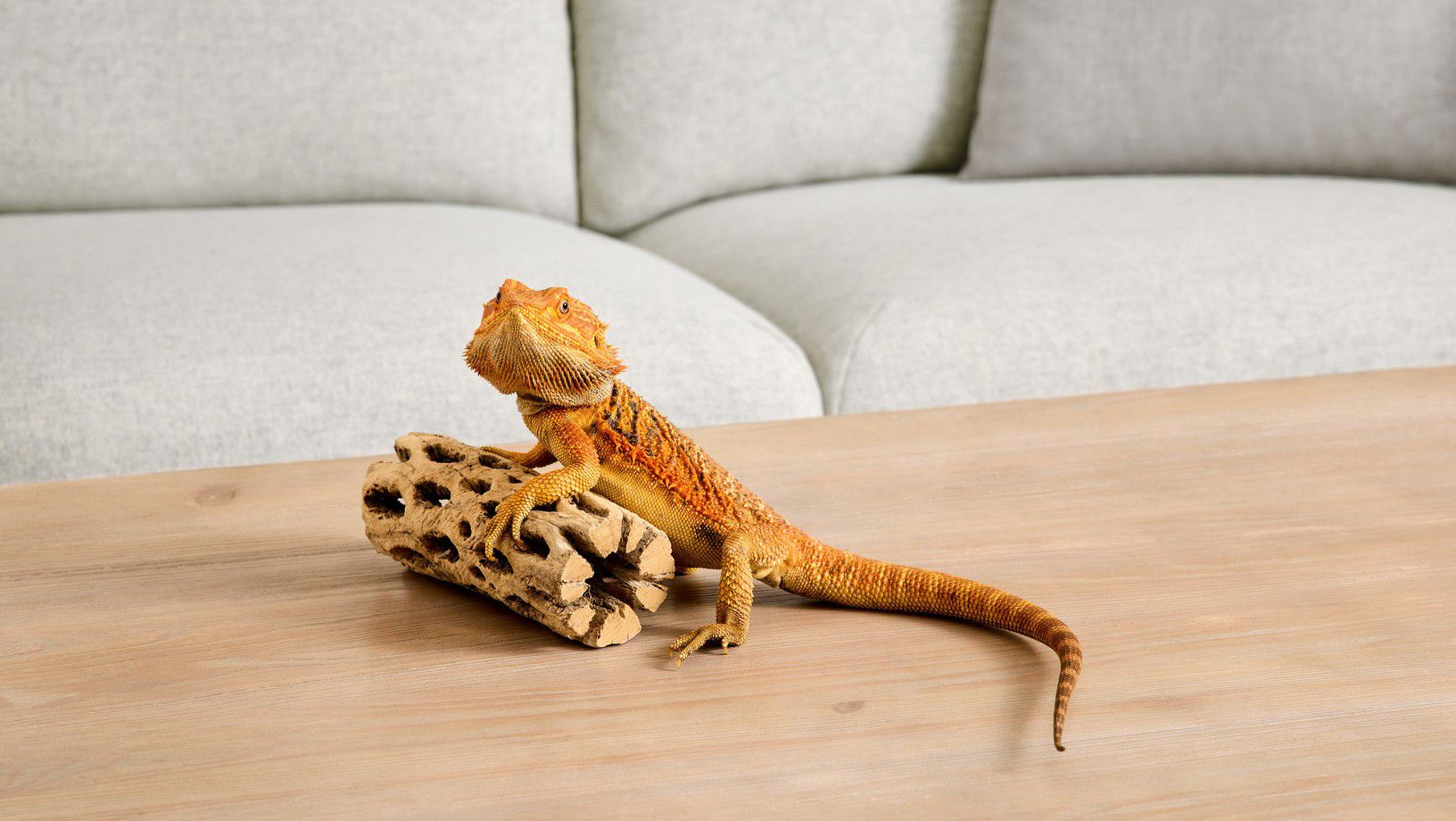
5. Bearded dragon
- 16 to 24 inches | 10 to 15 years | Frugivore and insectivore | UVB light recommended
Higher setup cost and a larger enclosure than the geckos on this list, but the most interactive and personable lizard on this list. Bearded dragon care guide.
Species | Diet | Lifespan |
|---|---|---|
Leopard gecko | Insects | 10 to 20 yrs |
Crested gecko | Crested Gecko Diet (CGD) + insects | 15 to 20 yrs |
Corn snake | Frozen mice | 15 to 20 yrs |
Ball python | Frozen mice | 20 to 30 yrs |
Bearded dragon | Insects + greens | 10 to 15 yrs |
What to consider before you decide
- Budget: Geckos and corn snakes have the lowest setup cost. Bearded dragons require more equipment.
- Live insects: Most lizards require insects. Corn snakes and ball pythons are good alternatives if that’s a barrier.
- Daily time: Different species require different levels of care and interaction. A snake may only need to be fed once a week and is otherwise content to just observe you and have its water refilled regularly. In contrast, bearded dragons need insects regularly and veggies daily in addition to wanting to interact and socialize with you. It’s important to be honest and realistic about how much time you can commit to the care of your new pet.
- Lifespan: Many reptiles live over 10 years with proper care, and are not a short-term commitment. Take into account the lifespan of the animal you’re looking to keep prior to purchase.