

Baby Bearded Dragon Care Guide
In this Article
Key takeaways
- Baby bearded dragons need significantly more protein than adults, which means more insects and less plant matter early in life
- Prey size matters for safety: never offer insects larger than the space between your dragon’s eyes
- UVB lighting is non-negotiable at every life stage, it’s how bearded dragons metabolize calcium, and without it they can develop serious bone disease
- Calcium dusting at most feedings is standard practice for juveniles because feeder insects alone don’t provide adequate calcium
- Loose substrate is a risk for dragons who may accidentally ingest it; solid substrate options are safer
- Give a new dragon one to two weeks to settle in before regular handling. Patience early on builds a much calmer, more confident dragon over time
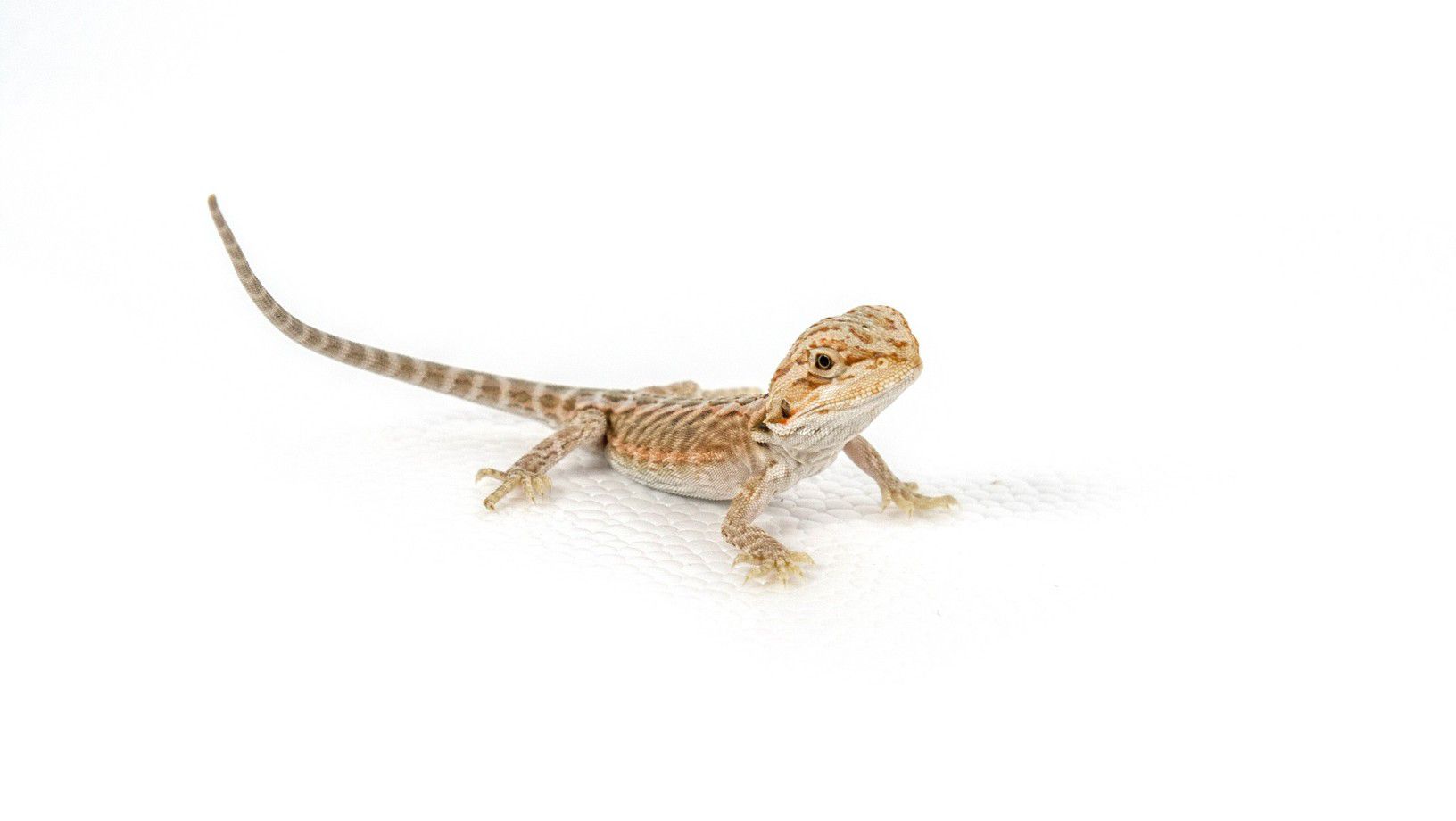
Bearded dragons are one of the most beginner-friendly reptiles you can keep, and a lot of that reputation is well-earned. They’re curious, they tolerate handling well when raised correctly, and they’re very engaging to watch. But the baby stage is also the most care-intensive part of a bearded dragon’s life, as getting the details right makes the biggest difference for their long-term health. This guide covers everything a new bearded dragon parent needs to know for the first year, from setting up the enclosure and getting feeding right to understanding how your dragon grows and what to watch along the way.
Life stages: what to expect
Bearded dragons grow quickly in their first year, and their care needs shift meaningfully as they move through each stage. Knowing roughly where your dragon is helps you calibrate feeding, supplements, and enclosure setup appropriately.
- Hatchling (0 to 2 months): 3 to 4 inches long, fragile, eating multiple times a day, needing very small prey
- Early juvenile (2 to 4 months): 5 to 9 inches, growing quickly, still primarily insect-dependent
- Juvenile (4 to 12 months): 10 to 15 inches, insect intake remains high, greens increasingly important
- Sub-adult to adult (12+ months): 16 to 24 inches, diet gradually shifts toward more plant matter, growth rate slows
Most bearded dragons reach their full adult size by 18 to 24 months. The first year is the period of fastest growth, highest nutritional demand, and the greatest sensitivity to husbandry errors.
Enclosure setup for baby bearded dragons
Tank size
A 40-gallon tank is a good starting enclosure for a young dragon and provides enough room to create a proper temperature gradient. You’ll eventually need to upgrade as your dragon grows: adults generally need a 75 to 120-gallon enclosure to have adequate space for thermoregulation and natural movement. One consideration with young juveniles in larger tanks: a very small dragon in a very large, open enclosure can feel exposed. If you’re using a larger tank from the start, adding more hides and cover gives them places to feel secure while they grow into the space. For a detailed look at enclosure setup including what you’ll need, what do I need for my bearded dragon tank setup? covers the essentials.
Temperature and heating
Getting temperatures right is one of the most important parts of bearded dragon husbandry, and one of the most common reasons a young dragon stops eating or develops health problems. Bearded dragons are ectotherms, meaning they regulate their body temperature by moving between warmer and cooler areas of their enclosure. If the gradient isn’t correct, they can’t properly digest food or absorb nutrients. Target temperatures to aim for:
- Basking spot: 95 to 100 degrees Fahrenheit. This is where your dragon will spend time warming up and digesting after meals.
- Warm side general temperature: 85 to 90 degrees Fahrenheit.
- Cool side: 75 to 80 degrees Fahrenheit. This gives your dragon somewhere to retreat when they’ve warmed up enough.
- Nighttime: 65 to 75 degrees Fahrenheit. Most rooms stay within this range naturally, but if your home gets cooler, a ceramic heat emitter (which produces heat without light) can maintain overnight temperatures.
Use a digital thermometer with a probe at each end of the enclosure to verify temperatures accurately. Stick-on thermometers are not reliable enough for this purpose. Overhead basking lights or ceramic heat emitters are the recommended heat sources. Heating rocks are not recommended for bearded dragons because they heat unevenly and carry a real risk of thermal burns. For more detail on reptile heating, how much heat and light do reptiles need? covers the principles thoroughly.
UVB lighting
UVB lighting is essential for bearded dragons at every life stage, and this isn’t something that can be skipped or substituted with diet alone. Bearded dragons use UVB exposure to produce vitamin D3, which allows them to absorb and use calcium properly. Without adequate UVB, even a well-supplemented diet can’t fully prevent calcium deficiency over time. A T5 High Output UVB bulb (10.0 or 12% UVI, depending on your specific enclosure depth) spanning roughly two-thirds of the enclosure length is a standard and reliable setup. A few important details:
- UVB cannot pass through glass or hard plastic and still be effective. The bulb needs to work through mesh or screen.
- UVB output degrades over time even when the bulb still produces visible light. Replace UVB bulbs every six months to maintain effective output
- Run lights on a 12 to 14-hour cycle during the day, with full darkness at night
Substrate For bearded dragons, solid substrate options are the safest choice. Young dragons eat enthusiastically and can accidentally ingest loose substrate during feeding, which is a risk for impaction.
- Recommended: Reptile carpet, ceramic tile, slate tile, or paper towels. These are easy to clean, safe for all ages, and eliminate ingestion risk.
- Avoid: Loose substrate like a topsoil-sand mix is generally not recommended until your dragon is older and reliably eating from a dish.
To help reduce the chance of accidental substrate ingestion, offer greens and other non-live foods in a shallow dish. Live feeder insects, such as crickets, are often best offered with feeding tongs or in a separate feeding container without loose substrate, since they can easily jump or crawl out of a shallow dish.
Hides and basking setup
Your dragon needs at least two hides (one on the warm side, one on the cool side) plus a clear, open basking surface like a flat rock or piece of slate positioned under the heat source. Hides give them somewhere to feel secure when they want to rest. However, if your dragon is spending nearly all of its time hiding—especially if it's accompanied by changes in appetite, activity, or basking behavior—it may be worth reviewing your enclosure setup and monitoring signs of stress or illness.
Feeding baby and juvenile bearded dragons
Feeding is where baby bearded dragon care looks most different from adult care. Young dragons are in a phase of rapid growth and need a diet that reflects that, which means a lot of protein from insects and appropriately sized greens available every day.
Diet ratio by age
The core principle of bearded dragon nutrition is that diet composition shifts with age:
- Baby dragons (0 to 6 months) should be getting the majority of their diet from insects, with leafy greens offered daily as a supplement to their insect feeding
- As juveniles mature toward the 6 to 12 month range, the balance begins to shift, with greens making up a more significant portion of daily intake
- Adult bearded dragons (12+ months) flip the ratio, eating primarily plant matter with insects offered less frequently
Follow the feeding recommendations in our Care Guide, which are designed to meet the nutritional needs of healthy bearded dragons at each stage. Because every dragon is an individual, it's also important to monitor your pet's body condition, growth, and overall health. If you have questions about your dragon's diet or nutritional needs, your exotic veterinarian can help tailor those recommendations to your pet.
Feeding frequency
Hatchlings benefit from two to three feeding sessions per day. Offer fresh greens daily, and provide appropriately sized insects at each feeding session to support their rapid growth. Multiple smaller meals are easier for a very young dragon to digest than one large feeding. As your dragon grows into the juvenile stage, you can transition to one or two feeding sessions per day, while continuing to offer fresh greens daily. The balance of insects and plant matter should shift as your dragon matures according to the recommendations in our Care Guide. Offer insects in the morning, after the enclosure has had time to warm up. Bearded dragons are more active and better able to digest their food once they've reached their preferred body temperature.
Prey size: the most important feeding safety rule
Prey items should be no larger than the width of the space between your dragon’s eyes. This is the single most important feeding safety guideline for young bearded dragons, and it applies consistently at every age. Prey that’s too large is a risk for choking, impaction, and neurological problems from pressure on the spinal cord during digestion. For hatchlings, this means starting with the smallest available crickets (often called “pinhead” crickets), transitioning gradually to larger sizes as the dragon grows. Dubia roaches are an excellent staple feeder at most sizes because they’re nutritious, relatively easy to gut-load, and can be found in appropriately small sizes for young dragons. Never source feeders from the backyard, as wild-caught insets may have parasites, or could have residue of pesticides or herbicides on them that could make a beardie very sick.
Recommended feeder insects
- Crickets: A good staple with various sizes. Gut-load before offering.
- Dubia roaches: Highly nutritious, good calcium-to-phosphorus ratio compared to crickets, available in small sizes for juveniles. A reliable staple feeder.
- Black soldier fly larvae (BSFL): High in calcium, lower in fat. A popular supplemental feeder.
- Mealworms: Can be offered occasionally to juveniles but are higher in fat and lower in nutritional value than the feeders above. Use sparingly.
- Superworms and waxworms: Reserve for adults and use infrequently. Both are high in fat and not appropriate as staple feeders for young dragons.
Always gut-load feeder insects before offering them. Gut-loading means feeding the insects a nutritious diet for 24 to 48 hours before use, which significantly improves the nutritional value your dragon receives from them.
Greens and vegetables
Leafy greens should be offered daily to young dragons even when insects make up the majority of the diet. This builds the habit of eating greens early, which matters later when the diet shifts and greens become the primary food source.
Good staple greens include collard greens, dandelion greens, mustard greens, turnip greens, and escarole. Finely chop everything for young dragons.
A few greens are worth using in moderation or avoiding. Spinach, Swiss chard, and beet greens contain oxalates that can bind calcium and interfere with absorption when fed in large amounts. Kale is similar. These aren’t dangerous in small quantities as part of a varied diet, but they shouldn’t be the main ingredient in your dragon’s salad.
Fruits can be offered occasionally as a treat. They’re high in sugar and shouldn’t be a significant part of a young dragon’s diet, but a small piece of papaya, mango, or melon now and then is generally well-received and not harmful.
For a full breakdown of what bearded dragons eat across all life stages, what do bearded dragons eat? covers the complete picture.
Supplementation
Supplementation is a crucial part of baby bearded dragon care because feeder insects alone don’t provide adequate calcium for a growing dragon. The combination of calcium dusting and UVB lighting is what supports healthy bone development. Rotate calcium, multivitamin, and calcium with vitamin D3 supplements to reduce the risk of over-supplementing any single nutrient.
Calcium powder
Dust feeder insects with plain calcium powder (without vitamin D3) at most feedings for juveniles. This compensates for the naturally low calcium content of most feeder insects and helps support the rapid bone growth happening during the first year.
Calcium with D3
A calcium supplement containing vitamin D3 can be offered a few times per week as a supplemental backup, but it should never be treated as a replacement for proper UVB lighting. Excessive vitamin D3 from supplements can accumulate in the body and cause health concerns, so more isn’t better here. Follow the product guidance and consult your exotic vet if you’re unsure how to balance this alongside your specific UVB setup.
Multivitamin
A reptile-specific multivitamin offered once or twice a week helps fill any nutritional gaps in the diet.
Hydration
Baby bearded dragons can be tricky to hydrate because many don’t readily drink from standing water. They tend to absorb moisture more readily through their skin and by licking water droplets.
Offer a shallow water dish in the cool end of the enclosure. Keep it small enough that a hatchling can’t accidentally fall in and struggle to get out. Change the water daily.
A light misting a few times per week encourages drinking and provides supplemental moisture. Some keepers also do brief, shallow warm-water soaks lasting around 10 minutes, once or twice a week, which helps with hydration and makes shedding easier. Never leave a young dragon unattended during soaking. Bearded dragons that are dehydrated may have skin that appears wrinkled or loose, sunken eyes, or reduced urate output (the white part of their waste). Persistent dehydration in a young dragon warrants a vet visit.
Shedding
Baby bearded dragons shed frequently because they’re growing fast, sometimes every few weeks in the first months. Shedding is a normal process, but it’s worth knowing what to look for. Signs a shed is coming: your dragon may appear dull or grayer than usual, lose interest in food for a day or two, or become temporarily less active. This is normal. During a shed, avoid handling if your dragon seems irritable, and don’t pick at or remove shed skin that isn’t coming off on its own. Retained shed, particularly around the toes and the end of the tail, can cut off circulation and cause serious problems. A warm soak can help loosen retained shed. If you notice consistent retained shed that isn’t resolving, or your bearded dragon has stuck shed that was not easily removed after a soak, contact your vet.
Handling and socialization
Bearded dragons are one of the most handleable lizards once they’re comfortable with people. Getting there takes a little patience at the start, especially with a very young dragon who is still figuring out their new environment. Give a newly arrived dragon one to two weeks to settle in before you begin regular handling. During this period, let them get used to seeing you and observing the enclosure without the added stress of being picked up. Feed them on schedule, keep the environment stable, and let them explore at their own pace. When you do start handling:
- Approach from the side or below, not from above. Coming from above mimics how a predator approaches, which can trigger a defensive response even in tame dragons
- Scoop from below and support the full body, including the tail
- Never grab your bearded dragon by the tail
- Start with short sessions of five to ten minutes and build up gradually
- If the dragon flattens their body, puffs their beard, or tries to scramble away, they’re telling you they’ve had enough. Put them back calmly and try again another day
Consistency matters more than session length. Regular, calm, low-pressure interactions build trust faster than infrequent long sessions.
Common beginner mistakes to avoid
- Feeding prey that’s too large: The space-between-the-eyes rule is there for good reason. It’s the most common feeding mistake and one of the easiest to avoid.
- Skipping or delaying proper UVB: It can take weeks to months for metabolic bone disease to become visible, but the underlying damage starts happening from the first days without adequate UVB. Getting this right from day one is much easier than trying to reverse MBD later.
- Incorrect temperatures: A basking spot that’s too cool means your dragon can’t properly digest food. A cool side that’s too warm means they have nowhere to cool down when they’re too warm. Both situations cause problems. Measure temperatures before your dragon arrives.
- Using loose substrate: Bearded dragons are eager feeders and will accidentally eat substrate. This is a serious impaction risk. Stick with tile or reptile carpet.
- Handling too soon or too much: A stressed young dragon is more susceptible to illness. Give them time to settle in and build up handling gradually.
- Skipping the vet visit: An exotic vet exam in the first few weeks is a wise investment. Many health issues common in young dragons, including internal parasites and early nutritional deficiencies, are much easier to address when caught early.
Signs to watch for and when to call your vet
Baby bearded dragons tend to hide illness longer than you’d expect. By the time a problem is visibly obvious, it’s often been developing for a while. Checking in with your dragon daily and knowing what healthy looks like makes it easier to spot changes. Contact your exotic vet if you notice:
- Lethargy that doesn’t resolve with appropriate temperatures
- Refusing food for more than a day or two without an obvious cause like a shed
- Hanging jaw, dropping food, weakness in the limbs, or tremors, which can be signs of metabolic bone disease
- Audible breathing, mucus around the nostrils, or open-mouth breathing, which suggest a respiratory issue
- Diarrhea, watery stools, or visible parasites in waste
- Retained shed that doesn’t resolve after a warm soak, especially around toes or tail tip
- Swollen or distended abdomen
Most serious health problems in young bearded dragons are preventable with correct husbandry, and most are treatable when caught early. When in doubt, an exotic vet visit is always the right call.
Frequently asked questions (FAQs)
How many crickets should I feed a baby bearded dragon?
There’s no single universal number because appetite varies with age, temperature, UVB quality, and the individual dragon. A practical approach: offer appropriately sized insects (no larger than the eye-width rule) and let your dragon eat as many as they want during a feeding session of about 10 to 15 minutes. Young dragons have large appetites relative to their size. If your dragon consistently stops eating quickly or loses weight, check your temperatures and lighting first, then consult your vet if those are correct.
My baby dragon isn’t eating. What should I do?
A new dragon may not eat for several days after arriving home while they adjust to their new environment. This is normal and not immediately worrying. Check your temperatures first (a too-cool basking spot is the most common reason a bearded dragon goes off food), confirm UVB is working, and keep the environment calm and stable. If your dragon hasn’t eaten after about a week in a correctly set up enclosure, or if they seem lethargic alongside the reduced appetite, contact your exotic vet.
Do baby bearded dragons need a heat lamp at night?
Most homes stay in the acceptable nighttime range of 65 to 75 degrees Fahrenheit without a night heat source. If your home gets colder than that overnight, a ceramic heat emitter (which produces heat without light) can maintain nighttime temperatures without disrupting your dragon’s light cycle. Colored nighttime bulbs often marketed for this purpose aren’t recommended by most exotic vets, as reptiles can see many of these wavelengths and the light may interfere with sleep.
When should I take my baby bearded dragon to the vet?
Scheduling an initial wellness exam with an exotic animal veterinarian within the first few weeks is strongly encouraged, even if your dragon appears healthy. This establishes a baseline, screens for parasites that are common in pet store animals and gives you a resource to ask questions. After that, annual exams are the standard for healthy adult dragons, with more frequent visits if health concerns arise. Young dragons can benefit from a check-in at around six months as well.
Can I house two baby bearded dragons together?
It’s generally not recommended, particularly for long-term cohabitation. Bearded dragons can show territorial behavior and competition for basking spots and food, even as young animals. Housing them separately ensures each dragon gets adequate food, heat, and resources without competition. If you want multiple dragons, separate enclosures give each one the best setup.
Information in this article is not intended to diagnose, treat or cure your pet and is not a substitute for veterinary care provided by a licensed veterinarian. For any medical or health-related advice concerning the care and treatment of your pet, contact your veterinarian.