Thanksgiving Pet Safety: Foods Dogs and Cats Should Avoid
In this Article
- A safer Thanksgiving starts with a pet plan
- Thanksgiving foods for dogs
- Foods that may be okay for dogs when prepared plainly
- Thanksgiving foods to keep away from dogs
- Thanksgiving foods for cats
- Thanksgiving decorations and plants to keep out of reach
- Helping dogs and cats handle Thanksgiving pet stress
- What to do if your pet eats something unsafe
Thanksgiving Pet Safety: Foods Dogs and Cats Should Avoid
Key takeaways
- Keep shared Thanksgiving foods plain and separate from seasoned dishes
- Dogs and cats have different safe-food lists, so check before you share
- Set up a calm, quiet space for your pets before guests arrive
- Keep candles, fall florals and holiday plants out of reach
A full table and a full house mean plenty of curious noses. Your dog has already noticed the turkey, and your cat has their eye on the centerpiece. A little planning keeps the day fun for everyone, including the furry guests that might be under the table. We’ll break down everything pet parents need to know in this guide.
A safer Thanksgiving starts with a pet plan
Food, decor and a fuller home can all change your pet’s day. Keep their normal meal routine as regular as you can. Decide ahead of time whether you’ll share any plain, species-appropriate food, so nobody makes the call mid-feast. In addition to their meals, keeping your normal enrichment, play, or walk schedule is usually a good call, even if the busy day makes it tough. If your pet has a sensitive stomach or a health condition, check with your vet before sharing anything new.
Thanksgiving foods for dogs
For dogs, ingredients and preparation matter as much as the food itself. Plain turkey can be a fine snack, while the same turkey with gravy and butter belongs on your plate.
Foods that may be okay for dogs when prepared plainly
Can dogs eat turkey, sweet potatoes, green beans or pumpkin? Many dogs may enjoy a small taste of each when it’s plain and fully cooked. These examples are for dogs only. Skip seasonings, sauces, butter and toppings.
May be okay for some dogs when plain and in small portions
- Turkey: Fully cooked, boneless and skinless, with visible fat trimmed
- Sweet potato: Cooked with no butter, sugar or marshmallows
- Green beans: Steamed or boiled with no salt, not in casserole form
- Pumpkin: Plain pumpkin purée, not pie filling
Thanksgiving foods to keep away from dogs
Stuffing commonly contains ingredients that may be unsafe for dogs, so it should stay off their plate. Bag the turkey carcass and secure your trash, too.
Keep away from dogs
- Stuffing and gravy
- Turkey bones, skin and fatty trimmings
- Ham and other salty, glazed or fatty meats
- Onions and garlic
- Grapes and raisins
- Chocolate, alcohol and desserts
- Foods with sugar substitutes like xylitol
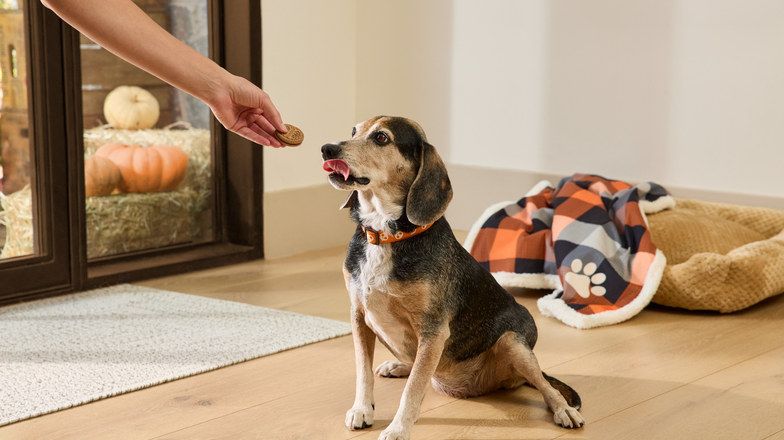
Our guide to Thanksgiving food safety for dogs covers more sides to share and skip. Want to include your dog without sharing from your plate? A few dog treats let them join the celebration.
Thanksgiving foods for cats
Cats need their own Thanksgiving plan. They can have different nutritional needs and sensitivities than dogs, and their list of safe table foods is short. Check every ingredient before you offer your cat anything. The list of Thanksgiving foods safe for cats is short:
- May be okay for some cats in a small amount: Plain, fully cooked, boneless, skinless turkey
- Keep away from cats: Seasoned dishes, stuffing, rich sauces, bones and desserts
Can cats eat turkey?
A small amount of plain, fully cooked, boneless, skinless turkey may be okay for some cats. Seasoned turkey, skin and pan drippings often carry butter, salt, onion or garlic, so set aside a few plain pieces before you season the bird. If your cat eats a veterinary therapeutic diet, ask your vet before offering extras.
Foods to keep away from cats
Many foods toxic to cats hide inside dishes that look harmless. Can cats eat stuffing? It usually combines onions, garlic, butter and seasonings, so keep it away from your cat.
- Seasoned dishes and stuffing: Herbs, salt and butter make these a poor fit
- Onions and garlic: Cats may be even more sensitive to these than dogs
- Rich sauces: Gravy and cream sauces may upset your cat’s stomach
- Bones: Cooked bones may splinter or cause a blockage
- Grapes and raisins: Watch fruit salads and baked goods
- Chocolate and desserts: Pies and cakes belong on the human table
- Alcohol: Move drinks off low tables and side tables
Food that suits your dog doesn’t automatically suit your cat. When you’re unsure, skip it.
Thanksgiving decorations and plants to keep out of reach
Cats can climb to reach counters and shelves that most dogs can’t. Cats who bat at dangling things may find ribbon hard to resist. Swallowed string may cause serious problems.
Fall florals and Thanksgiving cactus
Identify every plant before it comes home, including bouquets from guests. Keep anything you can’t identify away from your pets. Lilies sometimes appear in fall bouquets and cause kidney failure. Is Thanksgiving cactus toxic to cats? Thanksgiving cactus is generally considered non-toxic to cats and dogs, though chewing on any plant may upset your pet’s stomach. Plants are sometimes mislabeled, so confirm the name and place it where your cat can’t reach it. If your pet eats a plant you can’t identify, contact your veterinarian. Learn more about toxic holiday plants.
Candles, tablescapes and guest decor
- Choose flameless candles where possible
- Secure centerpieces and breakable décor
- Keep hot dishes away from counter and table edges
- Tuck cords for lights and warming trays out of reach
- Toss ribbon and turkey twine in a covered trash can
- Pick up dropped food right away
Helping dogs and cats handle Thanksgiving pet stress
Guests, noise and an unusual schedule can be tough for many pets. Some pets love a crowd, while others prefer to watch from afar. A quiet space, a steady routine and clear guest boundaries help dogs and cats alike. Some pet parents also ask their veterinarian about calming options. If your vet suggests one, explore dog anxiety and calming products.
Set up a quiet space before guests arrive
Set up a room away from foot traffic with familiar bedding, fresh water and a favorite toy. Then let your pet choose whether to join the gathering. For dogs, a crate they already enjoy can be a cozy retreat. Cats may appreciate a quiet, familiar area with their usual resources, like litter, food and a perch. You can also learn how to help calm your cat.
Help guests follow your pet’s routine
Share a few house rules before dinner:
- Don’t share food from your plate
- Close doors and gates behind you
- Let pets come to you instead of reaching for them
- Keep plates and drinks out of reach
Learn the signs your pet may be stressed and step in early.
What to do if your pet eats something unsafe
Act quickly. Save your vet’s number and the nearest emergency hospital’s address before the holiday.
- Contact your veterinarian or an emergency veterinary hospital promptly
- Share what your pet ate and how much, if you know
- Follow your veterinary team’s instructions
Don’t try to induce vomiting unless a veterinary professional tells you to.
What Thanksgiving food can dogs eat?
Many dogs may enjoy small amounts of plain, boneless turkey, sweet potato, green beans or pumpkin. Preparation and ingredients matter as much as the food. Read our guide to Thanksgiving food safety for dogs for more.
Can dogs eat stuffing?
No. Stuffing often contains ingredients that may be unsafe for dogs, such as onions, garlic, butter or rich meats.
Can cats eat turkey?
Some cats may enjoy a small amount of plain, fully cooked, boneless turkey. Skip seasoned meat, skin and rich leftovers. Ask your vet about your cat’s individual food needs.
Are Thanksgiving decorations safe for pets?
It depends on the item and your pet. Secure your décor, choose flameless candles and keep plants and small pieces out of reach.
How can I help my pet feel calmer around Thanksgiving guests?
A quiet space, a familiar routine and clear guest boundaries may help. If your pet’s distress continues or worries you, talk with your veterinarian.
Information in this article is not intended to diagnose, treat or cure your pet and is not a substitute for veterinary care provided by a licensed veterinarian. For any medical or health-related advice concerning the care and treatment of your pet, contact your veterinarian.
In this Article
- A safer Thanksgiving starts with a pet plan
- Thanksgiving foods for dogs
- Foods that may be okay for dogs when prepared plainly
- Thanksgiving foods to keep away from dogs
- Thanksgiving foods for cats
- Thanksgiving decorations and plants to keep out of reach
- Helping dogs and cats handle Thanksgiving pet stress
- What to do if your pet eats something unsafe


