Dog Safety Tips for Hot Weather
In this Article
Key takeaways
- Dogs cool themselves primarily through panting, which is far less efficient than human sweating, making them vulnerable to overheating faster than most people expect
- A normal dog body temperature is 100.5 to 102.5 degrees Fahrenheit. Heatstroke begins above 104 degrees and is a medical emergency
- Brachycephalic breeds, senior dogs, puppies, and overweight dogs face significantly higher risk and need extra precautions
- Hot pavement can burn paw pads when air temperatures exceed 77 degrees Fahrenheit. If it’s too hot for your hand, it’s too hot for their paws
- The most dangerous places for dogs in heat are parked cars and direct sun without shade or water
- If you suspect heatstroke, cool first and transport second: begin cooling immediately before driving to the vet
Summer is one of the best times of year to spend with your dog. It’s also one of the most dangerous for their health if you’re not paying attention to the temperature. Dogs can go from comfortable to seriously overheated faster than most pet parents realize, and heatstroke can become life-threatening within minutes.
The good news is that the risks are almost entirely preventable with the right habits. This guide covers how dogs overheat, which dogs are most vulnerable, how to recognize the warning signs, and exactly what to do if your dog gets too hot.
Why dogs overheat faster than people
Humans cool down through sweating across our entire body surface. Dogs are different: they have sweat glands only on their paws and their noses, and they rely almost entirely on panting to release body heat. Panting moves air across the moist surfaces of the mouth and airways, which evaporates water and dissipates heat. It works, but it’s far less efficient than full-body sweating, especially in humid weather when evaporation slows down.
A dog’s normal body temperature is between 100.5 and 102.5 degrees Fahrenheit. When that temperature rises above 104 degrees, heatstroke sets in. At 106 degrees and above, organ damage begins rapidly. Unlike a gradual build-up in people, that window can close quickly in a hot environment, particularly in a parked car, in direct sun, or during vigorous exercise in the midday heat.
Which dogs are most at risk
While all dogs can overheat, some are significantly more vulnerable than others.
- Brachycephalic breeds: Bulldogs, Pugs, Boxers, French Bulldogs, Boston Terriers, and other flat-faced breeds have narrowed airways that make panting less effective at releasing heat. These dogs can reach dangerous temperatures from just a few minutes outside in the heat, even in temperatures that seem manageable. Brachycephalic dogs make up a disproportionate share of heatstroke cases seen by veterinarians during warm weather.
- Senior dogs: Older dogs often have underlying health conditions, including heart disease, respiratory issues, or kidney problems, that reduce their heat tolerance. Their bodies are less efficient at regulating temperature.
- Puppies: Young dogs have underdeveloped thermoregulation and tire quickly, which can accelerate overheating during play.
- Overweight dogs: Excess body weight acts as insulation and makes heat exchange harder. Dogs carrying extra weight overheat at lower temperatures than lean dogs.
- Dogs with thick or double coats: Heavy-coated breeds hold more heat, though their coats also provide some insulation. Never shave a double-coated dog in summer: the undercoat actually helps regulate temperature in both directions.
- Dogs with pre-existing conditions: Heart disease, respiratory disorders, and kidney disease all reduce a dog’s ability to tolerate heat safely.
If your dog falls into any of these categories, the precautions in this guide aren’t optional. They’re essential.
How hot is too hot for dogs?
Air temperature
There’s no single air temperature that’s universally safe or unsafe for all dogs, because humidity, shade, access to water, fitness level, and breed all affect the picture. As a practical guideline: once temperatures exceed 80 to 85 degrees Fahrenheit, most dogs should have significantly reduced outdoor time, access to shade and cool water at all times, and no strenuous activity during the hottest hours. Dogs who fall into the high-risk categories above need extra caution even in temperatures that seem mild.
Humidity matters as much as temperature. High humidity slows evaporative cooling from panting, making the same air temperature feel significantly more dangerous. A 75-degree day at 90% humidity can be more challenging for a dog than a dry 85-degree afternoon.
Pavement and surfaces
Asphalt and concrete absorb and radiate heat significantly more than air temperature alone would suggest. When air temperatures reach 77 degrees Fahrenheit, asphalt in direct sunlight can exceed 125 degrees, which is hot enough to cause paw pad burns within minutes. The simple test: place the back of your hand on the pavement for five seconds. If you can’t hold it there comfortably, it’s too hot for your dog’s paws.
Walk on grass when possible during warm weather. Early morning and evening walks, when pavement has had time to cool, dramatically reduce paw burn risk. For dogs who need to walk on hot surfaces, dog boots can provide a protective barrier. Check paws after walks for redness, blistering, or limping, which can signal burns.
Inside parked cars
A parked car is one of the most dangerous places for a dog in warm weather. Research shows that vehicle interior temperatures can rise about 20 degrees Fahrenheit in just 10 minutes, and nearly 30 degrees within 20 minutes. On a 75-degree day, that means the inside of your car can reach over 100 degrees in less than 30 minutes. Cracking a window does not meaningfully change this. Shade provides only partial protection. The only safe choice is to leave your dog at home if you’re making stops where they can’t come with you.
Recognizing overheating, heat exhaustion, and heatstroke
Heat-related illness progresses in stages. Catching it early gives you time to act before it becomes an emergency.
Early warning signs (overheating)
- Excessive panting, heavier and faster than normal
- Excessive drooling
- Seeking shade or trying to stop and lie down during a walk
- Slowing pace or reluctance to continue moving
- Slightly elevated body temperature
At this stage, getting your dog into a cool, shaded area with access to water can resolve the situation. Don’t push through it.
Heatstroke signs (emergency)
If any of the following develop, treat it as a medical emergency and contact your veterinarian or an emergency clinic immediately:
- Rapid, labored breathing or difficulty breathing
- Vomiting or diarrhea, which may be bloody
- Weakness or staggering
- Confusion, disorientation, or glassy eyes
- Gums that are bright red, pale, or gray
- Seizures
- Collapse or loss of consciousness
Heatstroke causes damage to every organ in the body when left untreated, including the kidneys, liver, brain, and blood clotting system. Time is critical.
What to do if your dog overheats
The guiding principle from veterinary emergency research is: cool first, transport second. Begin cooling your dog before and during the drive to the veterinarian, not after you arrive.
Immediate steps
- Move your dog to a shaded area or an air-conditioned space immediately
- Apply cool, not cold or icy, water to the body. Focus on the head, neck, armpits, and groin. Recent research published in the JAVMA found that cooling the head is particularly effective for rapidly reducing core body temperature
- Use a fan if available to increase evaporative cooling
- Offer small amounts of cool water to drink if your dog is conscious and able to swallow
- Monitor your dog’s rectal temperature if you have a thermometer: stop active cooling once it reaches 103 degrees Fahrenheit to avoid overcooling
- Call your veterinarian or emergency clinic while you are cooling your dog so they can prepare for your arrival
What not to do
- Don’t use ice or ice water, which can cause blood vessels in the skin to constrict and actually slow internal cooling
- Don’t wrap your dog in wet towels, as wet towels can trap heat against the body and make it harder for your dog to cool down effectively.
- Don’t leave your dog unattended while cooling: monitor them closely
- Don’t wait to see if they improve before calling the vet. Even if your dog seems to recover, internal organ effects of heatstroke may not be immediately visible
Heatstroke requires professional veterinary care. Do not skip the vet visit because your dog seems better after cooling.
How to keep your dog cool and safe
Time walks and exercise carefully
The day reaches peak temperatures in the late afternoon, typically between 3 and 5 p.m. The most direct sunlight occurs around midday. Early morning and evening hours are consistently the safest windows for outdoor activity. During heat waves, even those cooler windows may require caution for high-risk dogs. For guidance on how much exercise your dog actually needs, how much exercise does my dog need? breaks it down by age and type.
Always provide shade and water
Any time your dog is outside, they need continuous access to fresh, cool water and a shaded area where they can rest out of direct sunlight. Change outdoor water frequently in hot weather as it warms quickly in the sun. Portable collapsible water bowls make this easy to manage on walks and outings.
Use cooling products
Cooling vests and bandanas work by soaking in water and using evaporation to lower your dog’s body temperature. Wet the product before putting it on, and re-wet as it dries during activity. Cooling mats provide a cool surface for resting indoors, particularly useful for heavy-coated breeds and dogs who struggle with heat at home. Find cooling vests, mats, and summer essentials in the Dog Shop.
Never leave your dog in a parked car
Even with windows cracked, even in the shade, even for a short errand. There is no safe amount of time to leave a dog unattended in a parked vehicle in warm weather. If you’re making a stop where your dog can’t accompany you, leave them at home.
Modify your indoor environment
On the hottest days, keeping your dog indoors with air conditioning or a fan is the most reliable way to prevent overheating. If your home doesn’t have air conditioning, provide multiple cool resting spots, use cooling mats, and keep rooms shaded with curtains or blinds during the hottest hours.
Watch for environmental heat sources
Asphalt, concrete, and metal surfaces can retain heat long after the air temperature drops. Dark-colored cars, outdoor exercise equipment, and metal surfaces in direct sun can all reach temperatures that burn paw pads. Choose grass over asphalt, provide shade, and check surfaces before letting your dog lie or walk on them.
A note on water activities
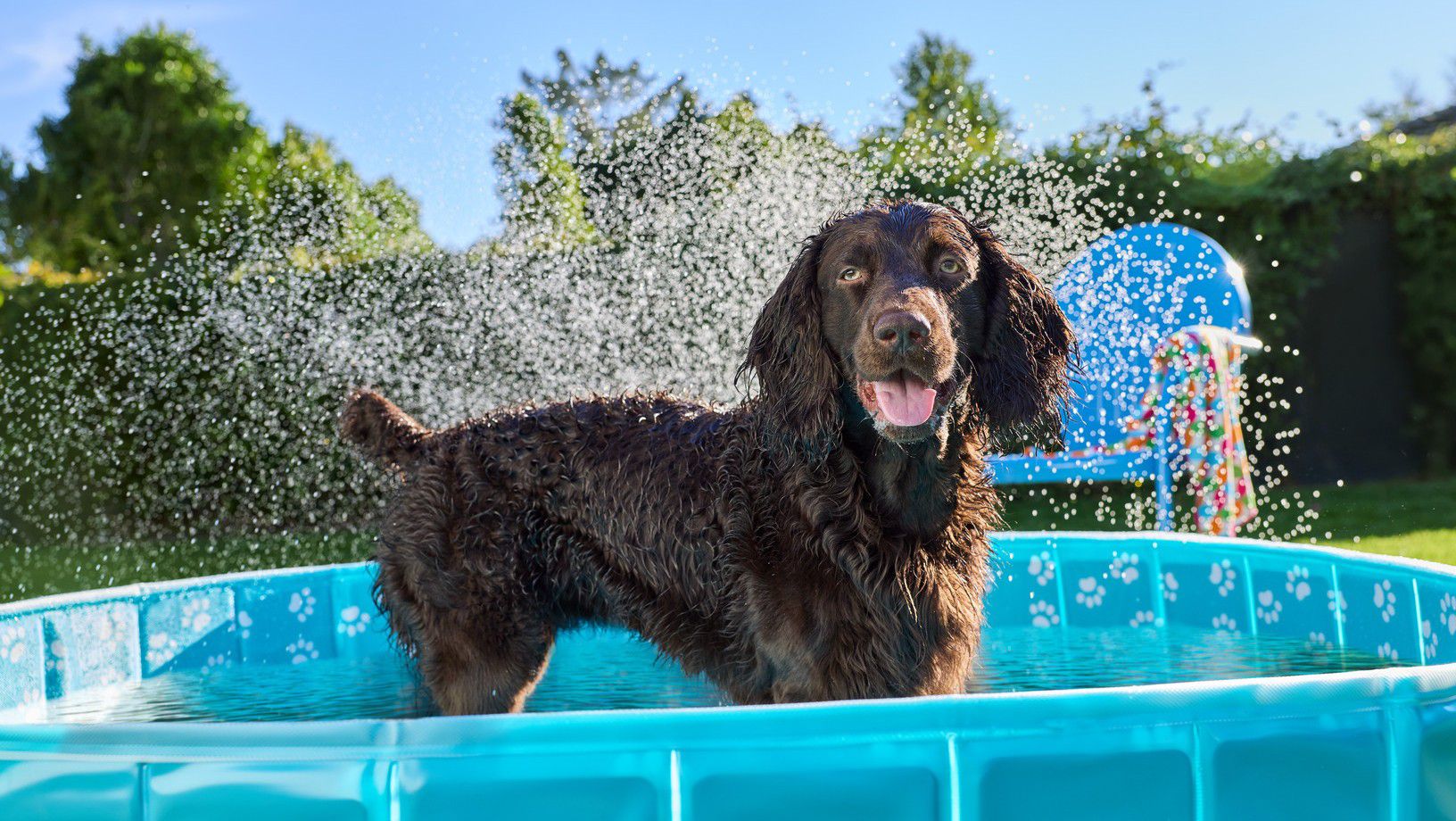
Swimming is an excellent way for dogs to stay cool and get exercise in warm weather, but it comes with its own safety considerations. Not all dogs are strong swimmers, and even dogs who enjoy water can become fatigued. For more on keeping dogs safe around pools, lakes, and open water, water safety tips for dogs covers the key precautions.
Frequently asked questions (FAQs)
How do I know if my dog is too hot or just panting normally?
Normal panting is relaxed, rhythmic, and stops when your dog rests in a cool environment. Concerning panting is louder, more labored, and persists even when your dog is at rest or in the shade. If panting is accompanied by drooling, reluctance to move, or any behavioral change, move your dog to a cool area with water and monitor them closely. If they don’t settle and cool down within a few minutes, call your vet.
Can I shave my dog to help them stay cool?
For single-coated breeds, a shorter trim may help reduce heat retention. However, dogs should not be shaved too close to the skin, as even small amounts of hair help regulate body temperature and protect against sunburn. For double-coated breeds, including Huskies, Golden Retrievers, German Shepherds, and similar dogs, shaving is generally not recommended. A double coat provides insulation in both hot and cold weather, helping regulate temperature. Shaving can disrupt how the coat grows back and may increase sun exposure on skin that is not designed for it. Talk to your Pet Stylist or veterinarian before making grooming changes for your specific dog.
What are the most dangerous situations for dogs in hot weather?
In order of severity: being left in a parked car, being left outside without shade or water during peak heat, and strenuous exercise in hot and humid conditions without cooling breaks. Brachycephalic and overweight dogs face significant risk even in situations that seem moderate.
How quickly can heatstroke become fatal in a dog?
Heatstroke can become fatal in a matter of minutes in extreme conditions, and organ damage can begin within a short period of sustained high body temperature. A dog left in a parked car on a hot day can develop life-threatening heatstroke within 15 to 30 minutes. Speed of intervention is the most critical factor in survival and recovery outcomes.
Is it safe to take my dog to the dog park in summer?
Dog parks can be a great outlet, but in summer they require extra care. Go during early morning or evening hours, confirm there’s shade and fresh water available, and watch your dog closely for early signs of overheating. Active play generates a significant amount of body heat quickly. For dogs in the high-risk categories, summer dog park visits should be brief and at the coolest part of the day. More on managing public play safely at dog park etiquette and tips for public play.
Information in this article is not intended to diagnose, treat or cure your pet and is not a substitute for veterinary care provided by a licensed veterinarian. For any medical or health-related advice concerning the care and treatment of your pet, contact your veterinarian.