

Puppy’s First 30 Days: What New Dog Parents Should Expect
In this Article
Bringing home a new puppy marks the beginning of an exciting journey. The first month sets the foundation for your relationship and establishes routines that will shape your puppy's development. These early weeks bring rapid changes as your puppy adjusts to their new environment and begins learning about their world. This new dog owner guide walks you through what to expect during those crucial first 30 days, from preparing your home to establishing healthy habits.
Before your puppy arrives: the essential checklist
Preparation makes the transition easier for both you and your puppy. Having puppy essentials ready before arrival day prevents last-minute scrambling and ensures your puppy's immediate needs are met.
Complete your new puppy checklist
This new puppy checklist covers the must-have items for your puppy's arrival:
Food and feeding supplies:
- Puppy food appropriate for your puppy's size and age
- Food and water bowls
- Dog treats sized appropriately for puppies
Regardless of where your puppy comes from or what you plan to feed long term, it’s important to have the food your puppy is currently eating when they come home. Keeping their diet consistent during the first week can help minimize digestive upset during an already stressful transition. After your puppy has settled in, you can gradually transition to your preferred long-term food choice over the course of several days.
Crate and confinement:
- Dog crate sized to fit your puppy when fully grown
- Crate pad or blanket
- Dog gates for room boundaries
Potty training supplies:
- Potty pads if using indoor training methods
- Enzymatic cleaner for accidents
- Waste bags for outdoor cleanup
Walking and identification:
- Dog collar with ID tag
- Dog leash (4-6 feet works well for training)
Comfort and play:
- Dog bed appropriate for your puppy's size
- Dog toys for puppies (soft and appropriately sized)
- Chew toys for teething
Grooming basics:
- Dog shampoo formulated for puppies
- Soft brush appropriate for your puppy's coat type
- Nail clippers (or plan for grooming appointments)
Organize your puppy supplies checklist
Your puppy supplies checklist should be organized by location. Set up a feeding station, sleeping areas, and play zones before your puppy arrives. This preparation helps you respond to your puppy's needs immediately rather than searching for supplies during those hectic first days.
Days 1-3: The initial adjustment period
The first 72 hours involve significant adjustment as your puppy transitions from their previous environment to your home. Expect your puppy to be uncertain, potentially anxious, and easily overwhelmed.
What to expect
During the first few days, your puppy may:
- Cry or whine, especially at night
- Have accidents despite your best efforts
- Sleep more than you expected
- Show little interest in playing
- Eat less than normal
- Follow you constantly
These behaviors are normal responses to change. Your puppy is processing a lot of new sights, sounds, smells, and routines all at once.
Your priorities
Focus on these essentials during days 1-3:
- Establish a feeding schedule: Feed at the same times each day using the food your puppy ate previously
- Start potty training immediately: Take your puppy outside frequently, especially after meals, naps, and play
- Create a safe space: Use a crate or confined area where your puppy can retreat when overwhelmed
- Begin name recognition: Use your puppy's name positively and reward when they respond
- Limit visitors: Keep the first few days calm and quiet
Resist the urge to constantly cuddle or play with your puppy. They need time to decompress and adjust at their own pace.
Days 4-7: Building routines
By the end of the first week, your puppy should show more confidence and curiosity. Routines become increasingly important as your puppy learns what to expect throughout the day.
Developing patterns
Establish consistent daily routines:
- Wake-up time: Take your puppy outside immediately
- Meal times: Most puppies eat 3-4 times daily
- Play sessions: Short, frequent play periods throughout the day
- Nap times: Puppies need 15-20 hours of sleep daily
- Bedtime: Establish a consistent evening routine
Predictable routines help puppies feel secure and make training easier. When your puppy knows what comes next, they can relax rather than staying constantly alert.
Veterinary care
Schedule a vet visit soon after bringing your puppy home, ideally within the first week, so you can confirm health status and align on vaccines, parasites, and behavior.
Days 8-14: Expanding boundaries
Week two brings noticeable personality development. Your puppy should be more comfortable with their environment and ready to explore beyond their initial safe space.
Puppy care tips for week two
These puppy care tips help you support your puppy's development during the second week:
Introduce new experiences gradually:
- Different floor surfaces
- Various household sounds
- Gentle handling of paws, ears, and mouth
- Meeting one or two calm people
Continue training basics:
- Reward your puppy for sitting before meals
- Practice short leash walks in your yard
- Teach your puppy to settle in their crate
- Reinforce potty training success with treats and praise
Keep training sessions very short—just 2-3 minutes at a time. Puppies have limited attention spans and learn better through frequent, brief sessions than long training periods.
Teaching your puppy to be alone:
Start practicing alone time in the first week, even if you work from home. Keep it easy: brief separations that stay below your puppy’s stress threshold, then build gradually. Avoid suddenly leaving your puppy for long stretches before they’ve learned that alone time is safe. Pair departures with something positive like a food puzzle.
Days 15-21: Building confidence
By week three, your puppy should be well-adjusted to their new home. This week focuses on continuing socialization and building on basic training.
Socialization considerations
Socialization is important for your puppy's development, but timing depends on vaccination status. Discuss appropriate socialization activities with your veterinarian based on your puppy's age and vaccination schedule. Safe early socialization activities may include:
- Carrying your puppy in public places to observe sights and sounds
- Meeting healthy, vaccinated dogs you know personally
- Inviting calm visitors to your home
- Playing in your own yard or private areas
What socialization really means (and what it doesn’t)
A lot of new puppy parents hear “socialization” and assume it means “meet as many dogs as possible.” In reality, good socialization is about helping your puppy feel safe and steady around normal life. That includes people, sounds, surfaces, handling, short car rides, and calm observation of the world, not just playtime with other dogs.
What socialization is:
- Short, positive experiences that end on a good note
- Exposure you can control, at a pace your puppy can handle
- Practice with everyday things like vacuum sounds, doorbells, stairs, elevators, umbrellas, bikes, and gentle grooming handling
What socialization is not:
- Tossing your puppy into chaotic situations to “get used to it”
- Letting unknown dogs at a dog park rush your puppy
- Forcing greetings with people or dogs when your puppy is hesitant
How to tell if you’re going too fast:
Your puppy does not need to love everything. They just need to learn that new things are not scary. If you notice any of these signs, make the situation easier right away by creating more distance or ending the session:
- Trying to back away, hide, or climb into your lap
- Freezing in place, crouching low, tail tucked
- Panting when it’s not warm, yawning repeatedly, licking lips a lot
- Refusing treats they normally like
Aim for “curious and calm” over “brave and pushed.” If your puppy is unsure, let them watch from a comfortable distance, reward calm behavior, and try again another day.
Training progress
Consider enrolling in puppy training classes if your veterinarian confirms your puppy has received appropriate vaccinations. Professional dog training provides structured learning opportunities and controlled socialization with other puppies.
Days 22-30: Settling in
The final week of your first month marks a milestone. Your puppy should feel at home and display their developing personality more clearly.
What you might notice
By day 30, many puppies:
- Respond reliably to their name
- Show clear preferences for certain toys or activities
- Have fewer potty accidents
- Sleep through more of the night
- Understand basic household rules
- Display bursts of energy followed by sudden naps
Remember that every puppy develops at their own pace. Some puppies adjust quickly while others need more time to build confidence.
Looking ahead
The first 30 days lay the groundwork, but puppy development continues for many months. Maintain the routines you've established while gradually introducing new experiences and continuing training.
Common first-month challenges
Nighttime crying
Most puppies cry at night during the first week. Place the crate in your bedroom so your puppy feels less isolated. A covered crate, white noise, or a ticking clock near the crate may help. Avoid taking your puppy out of the crate for comfort unless they need a potty break, as this can reinforce crying.
Alone time and separation stress
Even if you are home a lot, it’s worth teaching your puppy early that being alone is safe. Many separation problems start when a puppy rarely experiences time alone and then suddenly has to handle it for long stretches. Start small and make it boring:
- Do several short “practice separations” every day, even if it’s just stepping into another room and coming back
- Keep departures and returns calm, no big hellos or goodbyes
- Give your puppy something positive when you leave, like a stuffed food toy or a safe chew
- Build up gradually. Add a little time only when your puppy stays relaxed
What’s normal, and what’s not:
- Normal: a little whining that settles, brief protest, then quiet
- Not normal: intense panic signs like nonstop screaming, trying to escape hard enough to hurt themselves, heavy drooling, vomiting, or destroying the door or crate
If you see the “not normal” signs, do not push through it. Scale back to easier alone-time practice and consider working with your veterinarian or a qualified trainer early. It’s much easier to address this when your puppy is still young.
House training accidents
Expect accidents during the first month. Young puppies have limited bladder control and need frequent potty breaks, especially after meals, naps, and playtime. A helpful rule of thumb is that puppies can typically hold their urine for about one hour for each month of age, but this applies across a full 24-hour day—not just daytime hours.
Because of this, many puppies won’t sleep through the night at first and may need one or more overnight potty breaks. This is normal and improves gradually as your puppy grows.
If an accident happens, calmly interrupt your puppy only if you catch them in the moment, then take them outside right away. Avoid scolding or punishment after the fact—puppies don’t connect delayed discipline with what they did earlier, and it can cause confusion or anxiety instead of helping them learn.
Clean accidents thoroughly with an enzymatic cleaner to remove odors that might attract your puppy back to the same spot.
Many puppies make quick progress, but reliable housetraining is usually measured in months, not days. Accidents during the first several weeks are common, especially during growth spurts, schedule changes, or exciting new experiences.
Chewing and mouthing
Puppies explore the world with their mouths, and chewing is a normal part of development—especially during teething. Puppies are often “mouthy” because chewing helps them work baby teeth loose as new teeth emerge. Unlike people, puppies can’t wiggle teeth with their fingers, so chewing serves an important purpose.
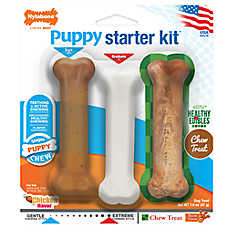
Provide a variety of appropriately sized chew toys, with different textures—such as soft, firm, and flexible options—to help satisfy this natural need. Redirect your puppy to these approved items whenever they mouth inappropriate objects, and supervise closely. As teething progresses and adult teeth come in, excessive chewing typically lessens. Puppy-proof your home by keeping valuable or dangerous items out of reach during this phase.
Biting during play
Puppies often use their mouths during play, but biting fingers or toes is not appropriate and should always be discouraged. If your puppy’s teeth touch skin, calmly and immediately end play for a brief moment. Redirect your puppy to an appropriate toy and reward calm, gentle play when they engage appropriately.
Consistent redirection helps your puppy learn that gentle play keeps the fun going, while rough play makes it stop. If biting is intense, frequent, or doesn’t improve with guidance, talk with your veterinarian or a qualified trainer for additional support.
A quick reality check on timelines
A lot of first-time puppy parents assume that house training, crate training, and calm alone time should be “done” within a couple weeks. For many puppies, the first month is about building habits and making steady progress, not checking boxes. Expect ups and downs. A great week can be followed by a messy week if your puppy is tired, overexcited, growing fast, or dealing with a routine change. That’s normal.
Health and wellness priorities
Vaccination schedule
Your puppy needs a series of vaccinations during their first few months. Follow your veterinarian's recommended schedule closely. Don't skip appointments even if your puppy seems healthy.
Parasite prevention
Discuss flea and tick prevention with your veterinarian. Many products aren't safe for very young puppies, so follow professional guidance on when to start prevention and which products to use.
Monitoring health
Watch for signs that warrant veterinary attention:
- Vomiting or diarrhea lasting more than 24 hours
- Loss of appetite for more than one meal
- Lethargy or lack of playfulness
- Coughing or difficulty breathing
- Discharge from eyes or nose
Young puppies can deteriorate quickly if they become ill, so contact your veterinarian promptly if you notice concerning symptoms.
Setting up for long-term success
The foundation you build during the first 30 days influences your dog's behavior for years to come. Consistency matters more than perfection. If you establish clear routines and boundaries now, your puppy will continue to thrive as they grow.
Key principles to maintain:
- Consistency: Keep rules and schedules predictable
- Patience: Learning takes time and repetition
- Positive reinforcement: Reward behaviors you want to see again
- Appropriate socialization: Continue introducing new experiences gradually
- Ongoing training: Build on basic commands as your puppy matures
Use this new puppy checklist as your starting point for a lifelong journey with your dog. The work you put in now creates a confident, well-adjusted companion.
FAQs
How much should my puppy sleep during the first month?
Puppies typically sleep 15-20 hours per day during their first few months. They need frequent naps to process all the new experiences and support their rapid growth. If your puppy seems sleepy most of the time, this is normal. Ensure they have quiet, comfortable places to rest. Like human babies, puppies don’t always sleep through the night at first. Many will need a brief potty break overnight, especially in the early weeks. Afterward, calmly return your puppy to their sleeping area to help them learn a regular routine of sleeping at night and being active during the day.
When can my puppy start going to dog parks?
Wait until your puppy has completed their initial vaccination series before visiting dog parks or other areas where many dogs gather. Your veterinarian will advise you on when it's safe based on your puppy's vaccination schedule and local disease risks. Typically, this is around 16-18 weeks of age.
How do I know my puppy needs to go potty in the middle of the night?
During the first few weeks, many puppies may need a potty break overnight, as very young puppies can’t hold their bladder for long periods. Rather than setting a strict alarm, watch for signs that your puppy needs to go out, such as restlessness or waking and whining. After a quick potty break, calmly return your puppy to their sleeping area to help reinforce a routine of sleeping at night and being active during the day. As your puppy grows, they’ll gradually be able to sleep through the night without needing to go outside.
My puppy seems scared of everything. Is this normal?
Some wariness is normal as your puppy adjusts to new surroundings. However, extreme fear that doesn't improve after a week or two may indicate your puppy needs more gradual exposure to new experiences. Work with a professional trainer or your veterinarian if your puppy shows persistent fearfulness. Early intervention helps prevent fear from developing into larger behavioral issues.
How often should I bathe my puppy?
Most puppies don't need frequent baths unless they get particularly dirty. Bathing every 4-6 weeks is typically sufficient. Too-frequent bathing can dry out your puppy's skin. Use puppy-specific shampoo and make bath time a positive experience with treats and praise. You can also explore dog grooming services for professional help. For quick cleanups between baths, spot cleaning with puppy wipes can be a helpful option for muddy paws, minor messes, or in-between grooming needs. You can also explore dog grooming services for professional help when needed.
What if my puppy won't eat?
Some appetite reduction is normal during the first few days due to stress. However, puppies should not skip more than one or two meals. If your puppy refuses food beyond that, contact your veterinarian. In young puppies, not eating—especially when combined with unusual sleepiness or low energy—can be a medical emergency due to a drop in blood sugar. This risk applies to all puppies but is more common in toy or very small breeds. When in doubt, it’s always best to seek veterinary guidance promptly.
Information in this article is not intended to diagnose, treat or cure your pet and is not a substitute for veterinary care provided by a licensed veterinarian. For any medical or health-related advice concerning the care and treatment of your pet, contact your veterinarian.
Shop this article




Related articles
We’re at your service
Find the right care, training & enrichment